
Along Florida’s east coast, one of North America’s most biodiverse estuaries is facing growing pressure from stormwater pollution that negatively affects plants and aquatic life.
The Nature Conservancy is pioneering the world’s first smart, interconnected watershed to improve the Lagoon’s health – creating a model to protect ecosystems, clean water, and communities.
This approach can be replicated across all 27 National Estuary Programs and in any watershed where development has altered the natural path of water.
The Lagoon’s Ecosystem Under Threat
The Indian River LagoonThe Indian River Lagoon stretches 156 miles along Florida’s Atlantic coast and supports more than 4,000 species of plants and animals, including manatees, dolphins, fish, birds, and seagrass meadows. Its overall health is threatened by large amounts of pollution, including from stormwater.
The Lagoon is home to seagrass beds that provide critical habitat for wildlife and sustain valuable commercial and recreational fisheries. Since 2009, experts estimate that portions of the Lagoon have lost as much as 58% of their seagrass beds due to excess nutrients carried into its waters by stormwater.
This pollution swept into the Lagoon comes in part from stormwater runoff – water that carries fertilizers, household chemicals, pet waste, trash, and other pollutants from yards, streets and parking lots.
One particularly harmful result of stormwater pollution is algal blooms. Spurred by unnatural concentrations of nitrogen and phosphorous, the blooms block sunlight, killing seagrass and the fish, manatees, and sea turtles that rely on this vital marine habitat to thrive.
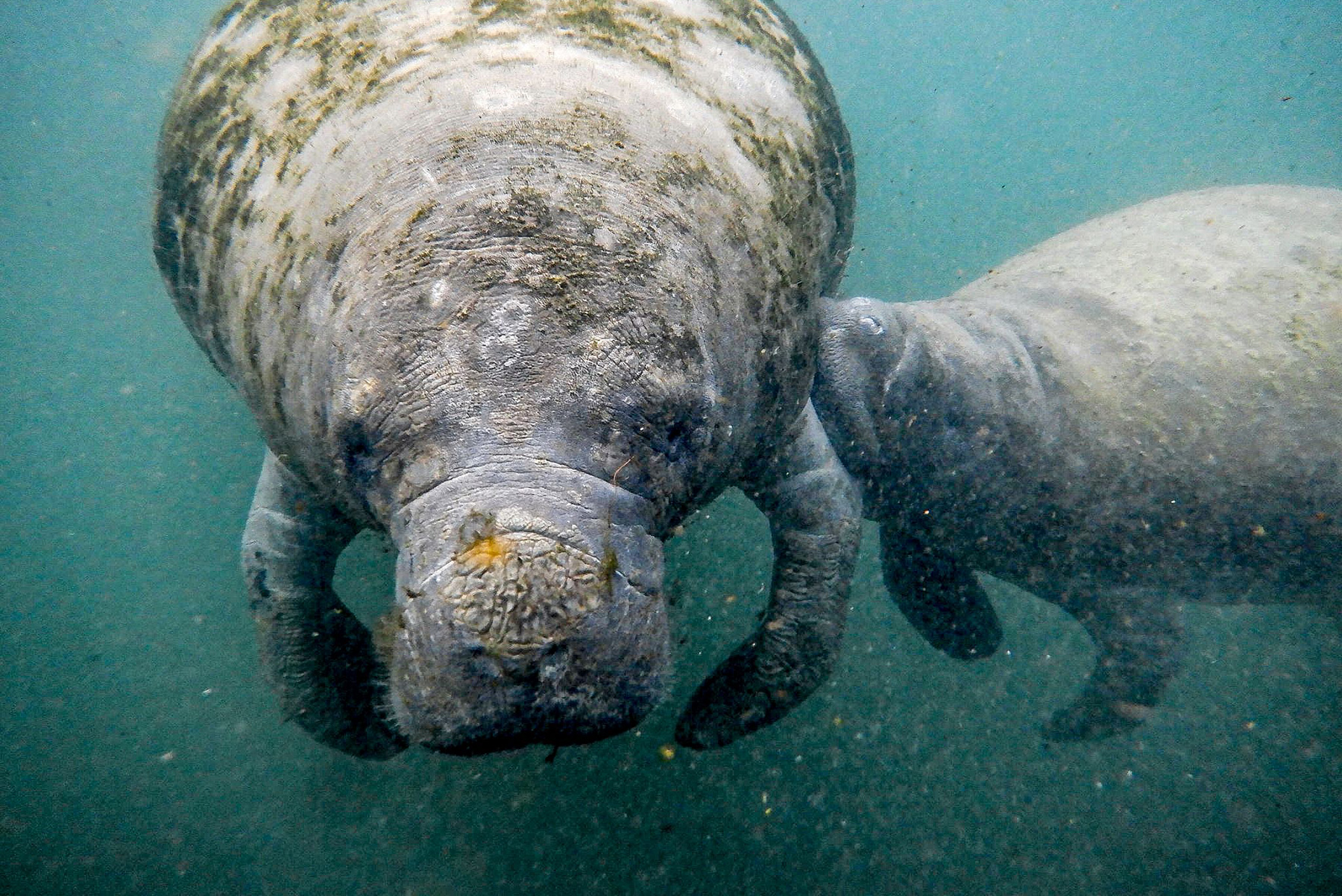
Florida Manatee
4,000 – 7,000 manatees live in and amongst Florida’s East Coast freshwater springs and coastal estuaries like the Indian River Lagoon. In 2021, 1,100 Florida manatees died when algal blooms in the Lagoon killed large swaths of seagrass — their primary food source.
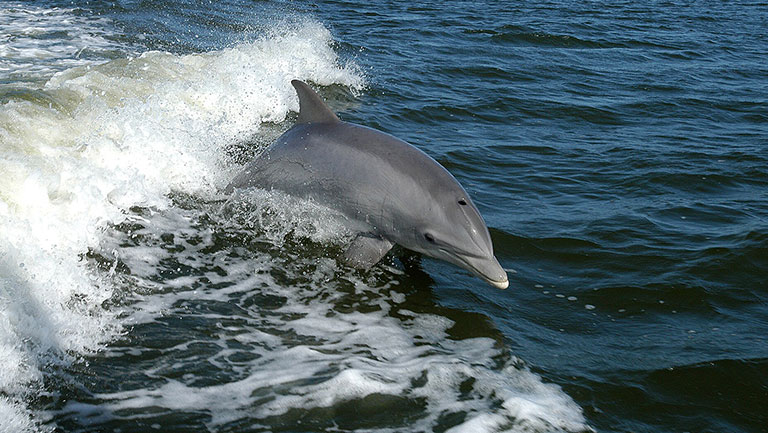
Indian River Lagoon Dolphin
Unique to the Lagoon, this subset of the Atlantic bottlenose dolphin has adapted to its warmer waters and sheltered habitat. Because they rarely leave the Lagoon, these dolphins are particularly vulnerable to water pollution, including from stormwater.
A Living Lab in the Lagoon
The Nature Conservancy, together with local experts, is building a “Living Lab” to prove the efficacy of Smart Watershed Network Management in the Indian River Lagoon. This is helping to keep the Lagoon’s ecosystem, and surrounding rivers, streams, and canals healthy.
What is Smart Watershed Network Management?
A watershed is a land area that channels water to streams, rivers, and creeks, and further to outflows such as reservoirs, bays, and the ocean.
Smart Watershed Network Management (SWNM) is a new way to actively coordinate stormwater infrastructure at scale. It means building stormwater systems that can adapt like nature, with new assessment tools, smart controls, and use of artificial intelligence and machine learning.
Across the watershed in the Indian River Lagoon, more than 11,000 stormwater ponds provide tens of billions of gallons of storage, yet almost all operate passively and in isolation. SWNM transforms these ponds into an interconnected, intelligent network by retrofitting them with sensors and automated controls, then coordinates their operations through real-time data sharing and predictive models that grow more accurate over time.
For example: machine learning and artificial intelligence can analyze historical and real-time sensor data alongside past weather patterns, current conditions, and future forecasts. Together that information can reveal patterns, track water flow, and predict potential future outcomes. This unlocks smarter ways to manage stormwater, so decision-makers can make more informed decisions. Data collection made possible with this technology also refines operational performance and watershed-level insights over time.
Nature once absorbed and filtered stormwater across the landscape. SWNM brings that principle back – draining ponds before storms to increase capacity, then carefully timing releases to work with natural hydrology, not against it. The result: better flood resilience, less pollution, and a system that improves with every storm.
It’s science in motion. Helping us learn faster, share what works, and scale up successful approaches to other communities across the country.
What is a Living Lab?
A Living Lab is like an open-air science lab – a real place where experts, communities, and technology come together to advance new modeling, machine learning, and active control technologies that make stormwater infrastructure smarter and more adaptive.
The Expected Outcome
This Living Lab pilot in the Indian River Lagoon will provide regulators, engineers, and other decision-makers in Florida with data to better understand the impact of stormwater on critical waterbodies like the Lagoon. It also comes with a roadmap for how to improve environmental outcomes through smart controls, enhanced weather forecasting, and improved planning tools. This provides decision-makers with real-time, active intelligence to make more informed design guidelines, regulatory requirements, and more cost-effective and impactful infrastructure spending possible to improve nature and communities.
This collaborative Living Lab was intentionally developed to be replicated elsewhere, and all tools are available open source.
Who’s Involved
The Indian River Lagoon Living Lab is a collaborative effort. The Nature Conservancy is working with a host of local decision-makers and experts, from the local water management districts to local universities, state-legislators and local community stakeholders. The Lab also receives engineering and computing support from collaborators.




Get Involved
The Indian River Lagoon Living Lab is consistently evolving to help a critical ecosystem for people and nature. We’re excited to share findings and learnings as the work progresses.
Contact us to learn more.
